
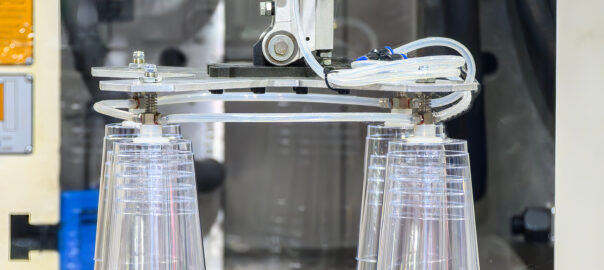
Designing thermoformed plastic parts requires strict adherence to geometric, material, and thermal specifications to ensure manufacturability and performance.
- Geometric Design for Thermoforming (DFT)
| Design Element | Specification/Metric | Constraint & Rationale |
| Radii (Internal Corners) | Minimum radius: 1.5 mm. | Larger radii (e.g., 0.125″ minimum for structural parts) are critical to minimize stress concentrations and material thinning. |
| Tool/Material Radius Ratio | Radius minimum should be equal to or greater than the initial material thickness. | If the radius is smaller than the starting thickness, forming is difficult or impossible. |
| Draft Angles (General) | Generally recommended: >2°. | Ensures easy demolding without surface defects. |
| Draft Angles (Molds) | Negative molds: 1.5° – 2° standard. Positive molds: 4° – 6° recommended. | Facilitates clean tool release and improves reproducibility. |
| Rib Draft Angle | Minimum draft: 3°. | Essential for part removal and uniform material distribution. |
| Rib Base Radii | Minimum: 25% of the material’s thickness. | Example: For a 0.250″ gauge, apply a minimum base radius of 0.0625″. |
| Forming Ratio (Negative) | Depth-to-Width Ratio should not exceed 1.5:1. | Higher ratios result in significant thinning, increasing the risk of rupture at the bottom edges. |
| Wall Thickness | The original sheet thickness is the maximum wall dimension. | The deepest drawn areas will inherently be the thinnest. |
| Tolerance (Typical) | General formed features: +/- 0.060″. | Tighter tolerances (e.g., +/- 0.010″) require additional, costly operations. |
| Shrinkage (PC) | Polycarbonate mold shrinkage: 0.005 – 0.007″ per inch (0.13-0.18 mm). | Shrinkage in the extrusion direction (MD) for 1.80-2.30 mm sheet is typically 6-7%, while transverse direction (TD) shrinkage is 0.5%. |
- Processing and Temperature Specifications (Polycarbonate Example)
| Process Step | Temperature/Time Specification | Critical Requirement |
| Pre-Drying (PC Sheet) | 250°F (121°C) in an air circulating oven. | Must occur before thermoforming to prevent moisture vaporization (air bubbles/voids). |
| Drying Time (PC Example) | 0.236″ (6mm) gauge sheet requires 24 hours at 250°F (121°C). | Sheets stacked without air spacing will not dry. |
| PC Softening Point | Glass transition temperature is 298°F (148°C). | Softening begins rapidly above 311°F(155°C). |
| Sheet Forming Temp (PC) | Target range: 340°F to 415°F (171°C−213°C)
Optimum: 350°F−375°F (177°C−191°C) |
Polycarbonate has a relatively narrow forming temperature range. |
| Mold Temperature (PC) | Recommended mold temperature range: 210°F−250 °F (99°C−121°C) | A heated mold ensures better shaping, more gradual cooling, and reduced induced stress. |
III. Material and Compliance Requirements
| Requirement | Specification/Metric | Relevant Materials & Example |
| UV Resistance | Required for exterior parts (e.g., consoles, housings). | ASA offers excellent UV stability. ABS is highly UV sensitive and requires a UV cap layer (e.g., ASA) for outdoor service. |
| Heat Tolerance (Low) | Insufficient HDT leads to permanent deformation. | PVC/Acrylic blends have a low heat distortion point, around 71°C (160°F). HDPE melting point is typically 120°C to 135°C. |
| Flammability Rating | Minimum for enclosed interiors/electrical housings: UL 94 V-0. | V-0 requires burning to stop within 10 seconds on a vertical specimen, with no flaming drips. V-2 explicitly permits flaming drips. |
| Fire Testing | Component subjected to flame for 2 1/2 minutes. | Temperature within one inch of the component must reach at least 648°C during the test. |
| Environmental Stress Crack Resistance (ESCR) | Must be specified for structural polyolefins (HDPE) near chemicals. | HDPE standard grades are susceptible to brittle failure when stressed and exposed to surface-active agents (fuels, cleaners). |
| Chemical Encasing (Tanks) | Cellular plastic must not change volume by more than 5% or dissolve after 24 hours at 29°C in reference liquids. | Non-polyurethane encasing plastic must have compressive strength of at least 60 pounds per square inch at 10% deflection. |
| Thermal Expansion | PC thermal expansion rate is approximately four times higher than metal. | For fastening to metal, slotted holes and controlled torque are mandatory to prevent thermal strain failure. |