Designing thermoformed plastic parts requires strict adherence to geometric, material, and thermal specifications to ensure manufacturability and performance.
Geometric Design for Thermoforming (DFT)
Design Element
Specification/Metric
Constraint & Rationale
Radii (Internal Corners)
Minimum radius: 1.5 mm.
Larger radii (e.g., 0.125″ minimum for structural parts) are critical to minimize stress concentrations and material thinning.
Tool/Material Radius Ratio
Radius minimum should be equal to or greater than the initial material thickness.
If the radius is smaller than the starting thickness, forming is difficult or impossible.
The more general quality standard ISO 9001 serves as a major foundation for ISO 13485, the globally recognized quality management system (QMS) standard for the medical device sector. While maintaining quality and efficacy is their shared objective, ISO 13485 has important additions and revisions that are specifically designed to fulfill regulatory criteria pertaining to medical device performance and safety.
Section 1: Parallels In between the Standards Both ISO 9001 and ISO 13485 use a similar basic framework and provide requirements for an all-encompassing Quality Management System (QMS).
Foundations of Shared QMS
ISO 9001:2015 vs. ISO 13485:2016
Process Approach
The foundation of both standards is a process approach to quality control.
Management Responsibilities
Both call for top management’s dedication to the QMS, which includes setting the quality targets and policy.
QMS Planning
In order to achieve quality goals, both require planning that considers the integrity of the QMS during the planning and execution of improvements.
Resource Management
Both need identifying and supplying resources, such as human resources (competence, training, and awareness) and infrastructure (e.g., facilities, process equipment).
Operation/Realization
Both contain customer-related procedures, design and development (Section 7.3 in 13485; Section 8.3 in 9001), and management of externally supplied goods and services (buying) are all covered in detail in both.
Improvement
Both emphasize measurement, analysis, and improvement processes, including mandatory requirements for implementing corrective action (CA) to prevent the recurrence of nonconformities.
Part 2: Important Distinctions and ISO 13485 Details
A sector-specific standard called ISO 13485 was created for businesses engaged in one or more phases of a medical device’s life cycle. In contrast to ISO 9001, which places a strong emphasis on improving customer satisfaction and continual development, ISO 13485 places a higher priority on the legal standards necessary for performance and safety.
ISO 13485 Specific Requirements
Key Focus
Corresponding ISO 9001 Clause Status
Regulatory Requirements
The organization must identify its role(s) under applicable regulatory requirements and incorporate these into the QMS. Compliance is the primary goal.
ISO 9001 focuses on statutory/regulatory compliance but lacks the specific emphasis on medical device safety regulations.
Risk Management
Requires the application of a risk-based approach to control appropriate QMS processes. The term “risk” specifically pertains to the safety or performance requirements of the medical device.
ISO 9001 applies general risk-based thinking to address risks and opportunities.
Documentation & Records
Requires the establishment and maintenance of one or more Medical Device Files for each device type or family, including general descriptions, specifications, manufacturing, packaging, and servicing procedures. Confidential health information protection is also required.
ISO 9001 requires documented information and records but has no equivalent clause for the Medical Device File.
Record Retention
Records must be retained for at least the lifetime of the medical device (as defined by the organization), but not less than two years from the device release.
ISO 9001 generally requires retaining documented information to support the operation of processes.
Outsourced Processes
Requires specific controls for outsourced processes, including written quality agreements, with controls proportionate to the risk involved.
ISO 9001 addresses external provision but does not explicitly require a written quality agreement.
Special Processes
Contains clauses with no equivalent in ISO 9001:2015, such as requirements for the cleanliness of product (7.5.2), installation activities (7.5.3), servicing activities (7.5.4), and particular requirements for sterile medical devices (7.5.5, 7.5.7).
These clauses contain requirements specific to the medical industry.
Post-Delivery Activities
Requires documented procedures for timely complaint handling (8.2.2), reporting adverse events/issuing advisory notices to regulatory authorities (8.2.3), and defining traceability for implantable medical devices (7.5.9.2).
ISO 9001 addresses customer feedback and post-delivery activities in a general sense.
Part 3: Transitioning from ISO 9001 to ISO 13485
An organization currently certified to ISO 9001 has a substantial advantage, as the fundamental QMS framework (process approach, planning, resources, infrastructure) is already in place.
The process of moving from a general ISO 9001 QMS to the specialized ISO 13485 QMS primarily involves adapting and integrating the existing system to meet the rigorous, regulatory-driven requirements of the medical device sector.
Key areas for adaptation:
Define Regulatory Context: The organization must first identify and document its specific role(s) in the medical device life-cycle (e.g., manufacturer, distributor, service provider) and determine all applicable regulatory requirements specific to its activities and markets.
Integrate Risk Management (Safety Focus): The existing risk approach must be reframed to focus specifically on the safety and performance of the medical device, incorporating mandated risk management activities throughout the product realization process.
Enhance Documentation: Create and maintain the sector-specific documentation, most critically the Medical Device File for each device type or family. Ensure all records meet the heightened retention requirements (lifetime of the device, minimum two years).
Strengthen Control of Outsourcing: Implement written quality agreements with external suppliers for outsourced processes and ensure the level of control and monitoring is proportionate to the risk presented by the purchased product.
Implement Specialized Process Controls: Document and implement procedures for activities specific to medical devices, such as:
Validation of software used in the QMS and production.
Requirements for cleanliness and contamination control.
Procedures for installation and servicing (if applicable).
Specific traceability requirements, particularly for implantable devices.
Develop Post-Market Procedures: Establish robust, documented procedures for handling customer feedback and mandatory complaint handling, including mechanisms for evaluating the necessity of reporting adverse events and issuing advisory notices to regulatory authorities.
ISO 13485 requires establishing, implementing, and maintaining documentation for any procedure or activity required by the standard or applicable regulatory requirements. By using the existing ISO 9001 framework injection molding, the organization builds upon its foundation by adding the necessary regulatory rigor and documented controls required for medical device quality.
This report presents a comprehensive technical study on the design of a plant tray using SolidWorks with Design for Manufacturing (DFM) principles applied for injection molding. The plant tray, intended for agricultural and nursery use, requires high strength, low cost, and durability under outdoor conditions. DFM considerations such as wall thickness, draft angles, rib and boss design, ejector pin placement, gate and runner optimization, and material shrinkage are systematically discussed. Case studies highlight the impact of poor vs. optimized design on manufacturability and cost. SolidWorks workflows are detailed with step-by-step methodology. The report concludes with manufacturing efficiency analysis, cost breakdown, and recommendations for scalable mass production.
Introduction to DFM and Injection Molding
Design for Manufacturing (DFM) is an engineering methodology that ensures a product can be manufactured easily, reliably, and cost-effectively without compromising its performance or functionality. Injection molding is one of the most widely used manufacturing processes for plastic products due to its ability to produce high volumes at low per-part cost. However, without proper DFM, defects such as sink marks, warpage, weld lines, and excessive cycle times can occur. This section explores the principles of DFM, particularly in relation to injection molding. Key topics include:
– Importance of uniform wall thickness
– Draft angles for ejection
– Avoidance of sharp corners
– Gate and runner placement for balanced flow
– Structural reinforcements with ribs
DFM reduces tool complexity, minimizes production waste, and extends mold life. By applying these rules in SolidWorks during design, costly reworks and delays can be avoided.
Plant Tray Design Requirements
The plant tray serves as a multi-cavity holder for pots, commonly used in nurseries and agricultural applications. The requirements for its design include:
– Strength: Must withstand the combined weight of multiple filled pots.
– Durability: Must resist cracking under repeated use and UV exposure.
– Drainage: Circular cutouts ensure excess water is drained efficiently.
– Stackability: Trays must nest or stack for efficient storage and transport.
– Lightweight construction: To reduce handling effort and shipping costs.
– Manufacturability: Design should avoid undercuts, allow easy molding, and minimize cycle time.
DFM ensures these functional requirements are achieved without sacrificing ease of production.
Material Selection and Shrinkage Considerations
The choice of material is critical for performance and manufacturability. Polypropylene (PP) and High-Density Polyethylene (HDPE) are the most common choices:
– Polypropylene (PP): Excellent toughness, flexibility, chemical resistance, and UV stabilizers available. Shrinkage ~1.0–1.5%.
– HDPE: Higher stiffness and impact resistance, suitable for heavier loads. Shrinkage ~1.5–1.8%.
Wall Thickness and Draft Angles
Uniform wall thickness is a core principle of DFM. For this tray:
– Wall thickness = 2.0–2.5 mm
– Thin enough to cool quickly but thick enough for durability.
– Prevents sink marks and ensures dimensional stability.
Draft angles of 1.5–2° are applied on all vertical surfaces. Draft Analysis in SolidWorks confirms manufacturability.
Ribs, Bosses, and Locating Features
Ribs reinforce the tray while minimizing material use. DFM rules applied:
– Rib thickness = 0.5 × wall thickness
– Rib height = 2–3 × wall thickness
– Fillet radius at base = 0.25–0.5 × rib thickness
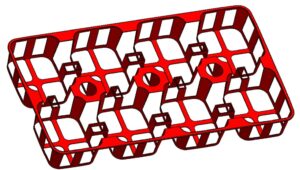
Bosses are used as locating and fastening features. In this tray, circular bosses also act as drainage holes. For dowel pin fits, a 10 mm pin requires 10.1–10.2 mm hole size to account for shrinkage.
Fillets, Stress Distribution, and Flow Optimization
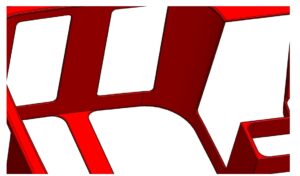
Sharp corners are avoided to reduce stress concentrations and improve mold flow. Fillets with radii of 0.5–1 mm are added at intersections. SolidWorks simulation demonstrates smoother flow paths with fillets compared to sharp edges. Case Study: A rib-to-wall junction with no fillet caused flow hesitation and weld line formation. Adding a 0.8 mm fillet eliminated the issue.
Ejector Pin Placement and Mold Design
Ejector pins are required for demolding. Best practices include:
– Place ejector pins on non-cosmetic surfaces.
– Position at rib bases to avoid sink marks.
– Distribute evenly to prevent warping.
In the tray design, ejector pins are located under ribs and thicker regions, ensuring smooth ejection without visible marks.
Gate and Runner Placement
Balanced filling is achieved with proper gate and runner placement. For this tray:
– Edge gates at thicker ribs for smooth filling.
– Balanced runner layout ensures equal flow.
Drainage and Stackability Features
Drainage cutouts prevent waterlogging and are drafted to mold cleanly. Stackability is achieved through geometric nesting. SolidWorks assembly tests confirm trays can stack without interference.
SolidWorks Workflow – Detailed
Step-by-step modeling report in SolidWorks:
Concept 1 Concept 1 is designed as per the rough sketch shared by the customer.
For reference, two models of pot were shared to check and choose the best suitable to fit 8 pots as per the shared sketch.One model (HP5181) was selected for the tray design and it was designed as per the sketch contraption.
Meeting with customer for feedback Meeting was held for feedback from customer after submission of Concept 1 design.Weight and tray height needed reduction as per the feedback.
Current weight of the tray was 600 grams.
Also, thin and shallow tray design was offered to considered for design improvements.
Concept 2 In phase 2 of design, competitive analyses were done from the market available plant trays.
Weight was reduced from 600 to 130 grams by doing all the effective features like thinning and shallowing of the excess area of the tray.A meeting was held for the reviews from customer and concept 2 design was approved by the customer.
After final approval, the design needed fine tuning and finally it was prepared for DFM by adding all the features required for injection molding as stated above.
Design summary
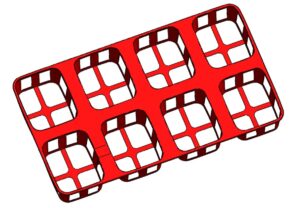
Here shown is the plant pot, based on this model, we need to design the tray of size mentioned for 8 pots.
Create base rectangle sketch for tray.
Cutout sections were introduced for drainage and light weighting.
Contraption done as per the layout defined by the customer. 4. Add ribs using Rib tool with automatic draft.
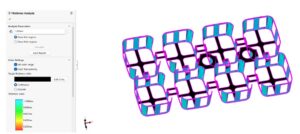
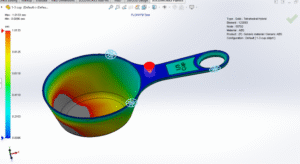
Mold flow analysis predicts material flow, cooling, and shrinkage. Simulation identifies potential weld lines, air traps, and hotspots.
Cost & Manufacturing Efficiency Analysis
DFM directly influences manufacturing cost. Factors include:
– Tooling cost: Reduced by eliminating undercuts and sharp corners.
– Cycle time: Lowered with uniform walls (average ~30–40s per tray).
– Material usage: Optimized with ribs instead of thick walls.
– Ejection efficiency: Reduced wear prolongs tool life.
Conclusion
This report demonstrates how SolidWorks and DFM principles combine to create a manufacturable, cost-effective, and durable plant tray. Through careful design of wall thickness, ribs, draft angles, fillets, and gating strategy, the tray is optimized for injection molding. Case studies validate the impact of DFM on reducing defects and costs. Future work may include automation of tray nesting and further optimization of cooling channels. DFM is not just a design practice—it is economic advantage in high-volume production.
The marine industry is built on precision, reliability, and innovation. Whether it’s for recreational boating, commercial vessels, or luxury yachts, every component—from the smallest adhesive to the largest structural part—plays a critical role in performance and safety. Behind every successful boat builder is a network of specialized suppliers who provide the right products at the right quality.
Here are some of the most essential components and suppliers that power the marine industry:
Seating and Upholstery Suppliers
Comfort and durability are key in marine seating. Specialized suppliers provide water-resistant seats, cushions, and helm chairs built with UV-stable vinyl, quick-dry foam, and corrosion-resistant hardware. Premium seating is not just about looks—it’s about ergonomics, safety, and resilience in tough marine environments.
Example of suppliers:
Chestnut Ridge Foam Inc: Specialty: High-performance foam solutions for marine seating and upholstery.
Wise Seats inc: Specialty: Leading manufacturer of marine seating systems for OEMs and aftermarket.
Communication & Navigation Systems
Marine communication suppliers deliver critical technologies such as VHF radios, GPS, AIS, radar, and digital switching systems. These suppliers ensure boaters stay safe and connected on the water, whether it’s a small fishing vessel or a superyacht. Partnerships with OEMs often include integrated dashboards and smart control systems.
Example:
Tocaro Blue inc: Specialty: Advanced wireless communication systems for marine vessels.
Icom America inc: Specialty: Marine radios and navigation electronics.
AIS class b transponder
Marine Motors & Propulsion Systems
Engines and propulsion are the heart of any boat. Suppliers in this segment provide inboard and outboard motors, electric propulsion systems, and precision propellers. From high-torque diesel engines to efficient electric drives, marine propulsion suppliers balance performance with efficiency and compliance with emissions standards.
Example:
Yamaha Motor Corporation, U.S.A: Yamaha Motor Corporation is renowned for its cutting-edge marine propulsion systems
Yamaha propulsion systems for boats
Hercules Electric Mobility, Inc: Specialty: Advanced electric propulsion systems for recreational and OEM marine applications.
Hercules propulsion system
Fiberglass Components (Small and Large Parts)
Fiberglass remains one of the most versatile materials in boatbuilding. Small parts like hatches, lockers, and enclosures are commonly produced using open layup methods. Large parts such as hulls, decks, and consoles are often manufactured with Resin Transfer Molding (RTM) or vacuum infusion, ensuring strength, durability, and smooth finishes. Specialized fiberglass suppliers support OEMs with corrosion-resistant, waterproof parts tailored to marine environments.
OmRaj Tech: Marine Focus: Supplies custom fiberglass parts for marine, agriculture, and construction sectors.
Resins, Adhesives, and Sealants
Strong bonds keep vessels seaworthy. Marine adhesives and resins—epoxies, polyurethanes, and silicones—are essential for structural bonding, waterproof sealing, and vibration resistance. Suppliers in this sector focus on high-performance chemistries that withstand saltwater, UV exposure, and extreme temperatures, ensuring long-lasting reliability.
Allnex: Specialty: Coating resins and additives, including VIAPAL® gelcoats and barrier coats for marine and pool applications.
WEST SYSTEM : Specialty: Industry leader in marine-grade epoxy systems.
Marine-Grade Plywood & Composites
Marine plywood is the foundation for interiors, bulkheads, and decks. Suppliers provide plywood treated for water resistance, dimensional stability, and rot prevention. Increasingly, builders are also turning to lightweight composite boards and laminates as alternatives, reducing weight without compromising strength.
Supersede: Specialty: Creator of Supersede Marine Board, a high-performance, eco-friendly alternative to traditional marine-grade plywood.
Composites One: Specialty: Distributor and manufacturer of advanced composite materials including core materials, resins, and reinforcements used in marine construction.
Instrumentation & Control Systems
Instrumentation suppliers provide gauges, displays, and control panels that interpret and manage everything from engine performance to onboard electrical systems. With the rise of digital interfaces, suppliers are integrating touchscreen controls, NMEA 2000 compatibility, and smart connectivity to enhance user experience.
Alltek Marine Electronics Corp: Specialty: Advanced AIS (Automatic Identification System) solutions for marine navigation and safety.
OceanVault: Specialty: Hardware-only marine security systems designed to protect high-value marine assets.
Climate & Comfort Systems
From air conditioning and heating units to sunroofs and shading systems, comfort solutions are critical for today’s boaters. Suppliers in this area work closely with OEMs to provide integrated climate systems designed for energy efficiency and quiet operation in compact marine spaces.
Webasto Thermo & Comfort North America: Specialty: Marine heating, cooling, and ventilation systems.
Dometic Marine: Specialty: Complete onboard climate solutions including air conditioning, refrigeration, and ventilation.
Safety & Compliance Equipment
Marine safety suppliers deliver life jackets, fire suppression systems, navigation lights, bilge pumps, and emergency beacons. These components are often regulated and certified, ensuring vessels meet strict safety standards before hitting the water.
Sea-Fire Marine: Specialty: Marine fire suppression and detection systems
ACR Electronics: Specialty: Emergency beacons and survival gear for marine safety.
Hardware, Fasteners & Small Parts
Behind every finished boat are thousands of small but critical parts—hinges, latches, cleats, rails, and stainless-steel fasteners. Marine hardware suppliers specialize in corrosion-resistant alloys and precision manufacturing that guarantee long-term reliability, even in saltwater conditions.
Teak Isle Mfg. / Boat Outfitters: Specialty: Custom marine hardware, access doors, latches, hinges, and small parts.
The International Boat Builders’ Exhibition & Conference (IBEX) is the premier event for the marine industry, where innovation and craftsmanship converge. Michigan, long known for its strength in advanced manufacturing, is once again making waves at IBEX 2025. From propulsion systems to plastics and precision machining, these Michigan-based companies are shaping the future of boating.
Here are the Top 10 Michigan Companies you should visit at IBEX 2025:
TREMEC – Novi, MI
Tremec.com
TREMEC is a global leader in drivetrain solutions, supplying transmissions, electric drivetrains, clutches, gears, and integrated control systems. For the marine industry, their technologies provide durability, efficiency, and smooth high-torque performance—making them a go-to partner for OEMs worldwide.
Om Raj Tech – Okemos, MI
OmRajTech.com
Om Raj Tech manufactures fiberglass, thermoforming, and plastic injection molding solutions, proudly made in Michigan. With ISO-certified facilities, they serve the marine sector by producing corrosion-resistant and waterproof components such as ladder lids, bow walk doors, anchor locker lids, consoles, and custom enclosures. Their team supports customers from design and prototyping through full-scale production.
Webasto – Fenton, MI
Webasto.com
A global name in climate comfort systems, Webasto equips boats with heating, cooling, chillers, sunroofs, and shading solutions. Their systems ensure onboard comfort and performance for yachts and recreational vessels alike.
Caster Concepts – Albion, MI
CasterConcepts.com
Based in Albion, Caster Concepts is a leading American manufacturer of industrial casters and mobility systems. Their products reduce ergonomic injuries, increase load capacity, and minimize replacement frequency—benefits that extend to aerospace, marine, and heavy-equipment industries.
ACME Marine Group – Walker, MI
AcmeMarine.com
Known for precision-engineered propellers, ACME Marine Group designs and manufactures propellers trusted by leading inboard boat brands. Made in the USA, their propellers deliver consistency and unmatched performance.
Alpine Marine Audio – Auburn Hills, MI
Alpine-USA.com
Alpine is redefining marine audio with its premium line of sound systems. Designed for bold aesthetics and superior sound quality, Alpine ensures every boating trip has the perfect soundtrack.
LilliPad Marine – Traverse City, MI
LilliPadMarine.com
This award-winning manufacturer is recognized for its innovative marine products, including diving boards, boarding ladders, and the Ghost Mount system. LilliPad products are designed to maximize fun and functionality on the water.
Medallion Instrumentation Systems – Spring Lake, MI
MedallionIS.com
Medallion is at the forefront of marine instrumentation, offering systems that interpret, display, and control onboard functions. Their feature-rich solutions are trusted by OEMs looking for advanced yet user-friendly marine system interfaces.
Multiax Technologies – Grandville, MI
MultiaxTech.com
Multiax specializes in CNC routers built for the demands of boatbuilding. With machines ranging from 5’x5’ to 20’x200’, they provide precision cutting, trimming, and machining of fiberglass hulls, decks, and aluminum structures.
GLIDE Bearings & Seal Systems – Alto, MI
GlideBearings.com
GLIDE Bearings manufactures non-metallic marine bearings and dripless shaft seals. Their ULTRA Seal System has become a favorite among sport fishing and yacht manufacturers thanks to its quick-change design—no haul-out required.
We are pleased to inform you that we are a sponsor of the Workforce Solutions Summit on September 18, 2025, in Grand Rapids, Michigan. It is a daylong conference from 8:00 AM to 4:00 PM where you’ll see manufacturing professionals, industry visionaries, and thought leaders who are dedicated to building a better workforce for the future.
As a business committed to the development of the manufacturing sector, we are all too conscious of the imperative to sponsor an event that encourages creative thinking, creates communities, and provides practical solutions to the industry’s most pressing workforce challenges today.
Why the Workforce Solutions Summit Matters
Manufacturing continues to be in a high-speed situation. Whether it is implementation of technology or absence of workers, companies are in a situation where innovation and thinking ahead are a must. One of the greatest challenges to the board is obtaining a skilled, trusted, and forward-thinking workforce.
Workforce Solutions Summit is designed to address these challenges head-on. Attendees will gain valuable insights on industry-defining trends and leave the event with practical strategies they can take back to their own organizations.
Some reasons why this summit stands out include:
Practical Applications: It deals with practical workforce issues and solutions.
Industry Experience: Global leaders in manufacturing and industry experts will present strategies and case studies.
Networking Time: Time to meet peers, form relationships, and swap ideas.
Joint Culture: Attendees will be immersed in a culture dedicated to solving shared workforce challenges.
It’s more than just learning. It’s where you can come to get energized, identify where you might find resources, where you might create some partnerships that can have a lasting effect.
Om Raj Tech at the MMA Workforce Summit – Sept 18, 2025 | Grand Rapids, MI
Om Raj Tech is proud to be part of this year’s Michigan Manufacturer’s Association Workforce Summit. As a trusted CETEC ERP integration partner and manufacturer’s representative for Michigan-based manufacturers, we help companies modernize their operations, streamline production, and strengthen supply chain visibility.
With deep expertise in ERP implementation tailored for small to mid-sized manufacturers, we enable businesses to reduce manual inefficiencies, improve real-time data access, and scale confidently. Our partnerships with Michigan plastics, thermoforming, and fiberglass manufacturers ensure we bring both technology and industry experience to every engagement.
If you’re attending the Summit, let’s connect to explore how digital tools and strong local manufacturing partnerships can drive smarter, faster, and more resilient operations.
Discounted Registration for Our Network
We are an honored sponsor and we’d be delighted to give our network a special discount. When you sign up for the event, just use the code SPONSOR25 at checkout and receive $25 off your ticket.
It is not limited in how many users can utilize it, so tell your colleagues, your customers, and any individuals in your life who might benefit from getting out.
👉 Register today at mimfg.org/workforcesummit
We can’t wait to see many familiar faces and greet many new friends in September in Grand Rapids.
Our Workforce Development Promise
Sponsoring the Workforce Solutions Summit is not just sponsorship to us—it’s our investment in the future of manufacturing. We know that this industry’s future is not just about technology and innovation but about the individuals behind it.
An effective workforce is the basis for expansion. Investment in events such as this enables a platform through which an exchange of thoughts, shared challenge fighting, and solution application are feasible. It reflects our dedication to collaboration as a method of overcoming workforce deficiencies, boosting workplace spirit, and readying the industry for tomorrow’s manufacturing leadership.
What You Can Expect at the Event
Workforce Solutions Summit includes a busy agenda with learning alongside networking possibilities. Attendees can look forward to:
Expert Sessions: On recruitment, retention, training, and leadership.
Interactive Discussions: Hands-on discussion on bridging workforce gaps.
Networking Breaks: Time to socialize with peers, share experiences, and establish new partnerships.
Actionable Resources: Materials that can be implemented within minutes.
Whether you are a business executive, human resource executive, manager, leader, or in any career related to these, the summit has something for everyone.
Event Details at a Glance
Date: September 18, 2025
Location: Grand Rapids, Michigan
Time: 8:00 AM – 4:00 PM
Discount Code: SPONSOR25
Join Us in Grand Rapids
We’d love to have you there for this momentous occasion. You’ll pick things up in a totally different way, get hands-on fixes, and mingle with people who are no less dedicated to workforce success than you are.
Don’t miss out on the opportunity to be part of a community of innovators and leaders collaborating to create the future of manufacturing. Make sure to use our special discount code SPONSOR25 at checkout to get a discount on your registration.
On the Workforce Solutions Summit
Annually organized by the Michigan Manufacturers Association (MMA), the Workforce Solutions Summit is a flagship event dedicated to finding solutions for today’s manufacturers’ workforce challenges. From finding qualified employees to structuring training programs and boosting retainability, the summit presents timely yet practical insights.
Today’s event provides a day of education, connections, and an opportunity to solidify your strategy for workforce development.
![Insert Workforce Solutions Summit Logo Here]
We are honored to be featured in the event and look forward to assisting the manufacturing community to thrive. We look forward to seeing you in Grand Rapids on September 18!
As Om Raj Tech Inc., a dedicated manufacturers’ representative, we take pride in connecting our partners with leading manufacturing solutions. Today, we’re spotlighting Jimdi Plastics, an industry expert in plastic injection molding, and their remarkable capabilities in advanced mold-in-color processes. In a market where product aesthetics and durability are as crucial as functionality, Jimdi Plastics consistently delivers components that meet exacting color standards and high-performance demands.
Mastering Color Directly from the Mold
At Jimdi Plastics, “mold-in-color” means the plastic material is precisely colored before it’s injected into the mold. This integrated approach offers distinct advantages over post-molding painting:
Enhanced Durability: The color is inherent to the material, making parts more resistant to chips, scratches, and fading.
Consistent Aesthetics: Mold-in-color ensures uniform color across all parts, which is vital for brand consistency and overall product appearance.
Streamlined Production: Eliminating secondary painting steps can contribute to a more efficient and potentially cost-effective manufacturing process.
Jimdi Plastics demonstrates versatility in their color molding. They can work with pre-color material or utilize “salt and pepper” mixes to achieve the desired shade. To ensure precise color matching, whether it’s for a proprietary texture color or replicating an existing part, color card, or specific range, Jimdi collaborates with a network of trusted vendors.
Achieving Flawless Class A Surfaces and Mitigating Defects
A particular area of expertise for Jimdi Plastics is the production of Class A surfaces. These are often exterior components, such as a chair’s front cover, that are highly visible and require an impeccable finish. Jimdi’s commitment to quality ensures these textured surfaces are free from common defects that can plague colored plastics, including:
Color Swirls: These can occur if the material isn’t mixed properly or if pellets don’t blend correctly.
Burns: Overheating of the material can lead to visible burn marks, particularly noticeable with colors.
Contamination: Any foreign particles can stand out on a colored surface, compromising the part’s appearance.
Jimdi’s team is skilled at identifying and addressing these issues, even resorting to remixing material or adjusting quantities to achieve a flawless result.
Rigorous Quality Assurance: Jimdi’s Commitment to Consistency
To uphold their high standards in color molding, Jimdi Plastics implements a comprehensive quality assurance protocol:
Operator Color Acuity Training: All operators undergo specific training and testing to sharpen their ability to detect subtle color variations.
First-Piece Verification: Before a production run commences, the quality team meticulously checks the first molded part against customer-provided color cards to confirm it falls within the specified color range.
Continuous Color Checks: Throughout the entire production run, ongoing color checks are performed to maintain consistent part appearance and finish.
Advanced Color Measurement Technology: Jimdi utilizes a specialized unit that measures the reflectiveness of the color with remarkable accuracy, up to 0.01%. This advanced tool allows them to:
Rapidly verify colors in as little as three seconds.
Set a master color and define a precise acceptable range, for example, achieving a 99.9% color match within a 99.7% acceptable range.
While Jimdi Plastics’ expertise in mold-in-color is a significant asset, it is part of a broader spectrum of advanced injection molding capabilities. Established in 1997, Jimdi Plastics operates from a 40,000 square-foot facility in Allendale, equipped with 16 presses ranging from 150 to 1100 tons. They excel in serving companies that do not produce plastic themselves, offering a “hands-off, out of mind” solution for their plastic needs.
Jimdi Plastics serves a diverse range of industries:
Automotive: They have a deep-rooted history in the automotive sector, focusing on challenging parts, often using nylon and glass-filled nylon. Their processes are designed to meet the automotive industry’s “fastidious” PPAP requirements, submitting a Level 3 PPAP for all automotive projects.
Office Furniture: A strong focus in West Michigan, supporting major furniture makers. They manage projects ranging from high-volume parts run weekly to tools run only once a year, utilizing materials like styrenes, polypros, ABS, clears, and opaques for both functional and aesthetic components.
Consumer Products: Jimdi actively works to bring consumer product manufacturing back to the United States, leveraging their ability to compete on total value chain costs against overseas suppliers. They can even help create CAD from sample parts if original tooling information is unavailable.
Guns and Ammo: A passionate area for the team, Jimdi produces components like wads for shotguns and works to integrate more plastic into firearm designs.
Medical: Experience in molding large diagnostic equipment housings and capable of rapidly developing tooling for smaller diagnostic test kits, especially for companies looking to onshore production.
Their manufacturing versatility extends to a wide array of materials, including nylon, glass-filled nylon, PCABS, styrenes, polypros, ABS, clears, and opaques.
Jimdi Plastics also offers a comprehensive suite of secondary operations:
Sonic welding
Painting (through world-class partners)
Kitting and hand assembly
Hot plate welding (with in-house technical experience to bring this capability in)
CNC machining of plastic parts (with in-house technical expertise)
Laser etching (through partners)
Examples include assembling arm pads onto powder-coated castings and multi-piece assemblies.
Automation is integral to Jimdi’s operations, enhancing efficiency, part accuracy, productivity, and operator safety:
Central resin loading via vacuum systems ensures continuous material supply to presses.
End-of-arm tooling for robots handles pick-and-place operations.
Custom-designed subassemblies and check stations improve part quality and assembly processes for complex products like chair components.
Automated programs for tools optimize cycle times and allow operators to focus more on quality control.
Jimdi’s commitment to quality is underscored by their rigorous PPAP process, which includes DFMEAs (Design Failure Mode and Effects Analysis), PFMEAs (Process Failure Mode and Effects Analysis), control plans, and dimensional studies, especially critical for automotive applications. They establish clear visual masters of “good” and “bad” parts to standardize quality expectations across their teams.
They also address common manufacturing challenges, for example:
For large, thick-walled parts like hydraulic valves, they’ve developed processes to eliminate voids and achieve long cycle times (9 to 17 minutes).
For glass-filled nylon automotive components, they’ve solved issues of dimensional instability, warpage, and ovality by introducing chillers to control the process and reduce shrink caused by hot runner systems.
For thin-walled waste bins, they’ve mastered processes to prevent inconsistencies in wall thickness.
Jimdi Plastics works with various tooling solutions, including domestic, overseas, and a hybrid model where local tool shops partner with overseas manufacturers. They can also use mud-based tooling which allows a common frame for multiple tools, sharing costs. Furthermore, their program management team provides weekly updates and milestones during tool builds, often with pictures, to keep customers informed. For onshoring projects, Jimdi offers the unique value of having “boots on the ground” in China to physically inspect tools and bank numbers at supplier facilities, assisting customers with a smooth transition.
Jimdi’s philosophy on continuous improvement involves identifying five key projects annually and driving them to completion, ensuring ongoing value delivery to customers.
Connect with Om Raj Tech Inc.
Jimdi Plastics stands out not just for their technical prowess but for their deep understanding of various industries and their dedication to being a comprehensive solutions provider. If you’re seeking a manufacturing partner capable of delivering high-quality, consistently colored, and precisely molded plastic components, Om Raj Tech Inc. is here to help you explore Jimdi Plastics’ offerings.
For more information or to discuss your specific plastic injection moldingrequirements, we are available to connect.
At Jimdi Plastics, represented by Om Raj Tech, our capabilities extend beyond precision injection molding to encompass comprehensive manufacturing solutions. We engineer processes that deliver consistent quality, operational efficiency, and enhanced product performance for our customers.
The Challenge & Our Innovative Approach
Jimdi Plastics manufactures complex plastic components across various industries. For a specific multi-component assembly, previous manual methods introduced challenges, including ergonomic strain on operators and instances of non-conforming parts reaching later production stages. To resolve these, our team embarked on an in-house project to re-engineer the assembly process, developing a purpose-built assembly fixture. This assembly system has undergone multiple iterations, currently operating at its fourth generation.
This customer-specific fixture was developed entirely in-house, from initial concept through physical design and assembly. It systematically processes a three-piece assembly comprising a fulcrum, lead screw, and an end cap. The fixture incorporates several key functions to ensure precise assembly and integrated quality checks:
Pneumatic Assembly Integration: This system replaced a manual arbor method that required hand pulling. It now utilizes a pneumatic punch and nest system to accurately join mating components.
Integrated Gate Vestige Validation: A critical feature is the mechanical check for the tap-style gate vestige. If the vestige is not flush or exceeds its specified length, it mechanically obstructs the part from seating in the nest, thereby preventing defective components from entering the assembly process.
Precision Screw Seating and Cooling: A specialized vibratory unit accurately pulls the lead screw down to a pre-defined diameter along a rail, which dictates the part’s final length. Concurrently, an internal cooling system aids in setting the part as it transitions.
Automated Cap Presence Verification: As the assembled unit moves, a mechanical function verifies the full seating of the end cap. If the cap is absent or improperly seated, the part is automatically diverted into a reject chute, ensuring only complete and correctly assembled units proceed to final packaging. This mechanism specifically addresses prior issues where operators might have missed components.
Performance Outcomes: Enhanced Efficiency and Quality
Implementation of this custom-engineered fixture has yielded significant operational and quality improvements:
Improved Operator Ergonomics: Automation of previously manual and strenuous tasks has reduced operator fatigue, enabling personnel to focus on critical quality inspections rather than repetitive physical actions. This contributes to a safer and more effective work environment.
Robust Quality Control: The integrated mechanical checks and automated rejection mechanisms ensure that only high-quality, defect-free components are advanced in the production stream. This in-process validation is a core element of Jimdi Plastics’ quality management system.
Increased Process Efficiency: Automating these intricate assembly steps has resulted in a more efficient manufacturing process, reducing per-part production time, enhancing machine utilization, and minimizing scrap generation.
Comprehensive Secondary Operations and Automation Capabilities
Beyond this specific fixture, Jimdi Plastics offers extensive secondary operations and automation solutions for various customer requirements:
Secondary Operations: Services include sonic welding, painting, kitting, and hand assembly.
Automation Types: We integrate diverse automation types, such as end-of-arm tooling for robotic pick-and-place, feeder systems for manual loading, and check stations for color consistency.
Rapid Automation Development: Our team can create almost any end-of-arm tooling within a few days. Program writing for automation is fast, typically within 24 hours, and can be completed in as quickly as 8 hours for urgent projects.
Problem-Solving Approach: If a customer requires a service not typically in-house, such as hot plate welding, CNC machining, or painting, Jimdi Plastics will “figure it out”. This involves leveraging our technical team’s experience or our world-class network of partners within a 50-mile radius of Grand Rapids.
Quality Management for Secondary Suppliers: For services performed by partners, quality is maintained through the Production Part Approval Process (PPAP) and by developing and signing off on master samples with both the supplier and the customer.
Continuous Improvement: Jimdi Plastics maintains a philosophy of continuous improvement, exemplified by an annual planning process that identifies five key continuous improvement projects to be completed each year.
Partner with Jimdi Plastics, through Om Raj Tech, to leverage our expertise in optimizing your plastic component manufacturing and assembly processes.

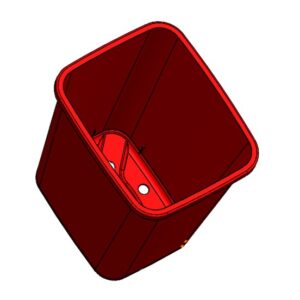
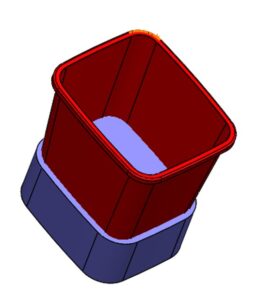
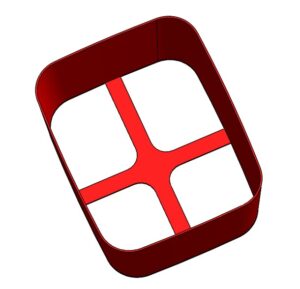
 4. Add ribs using Rib tool with automatic draft.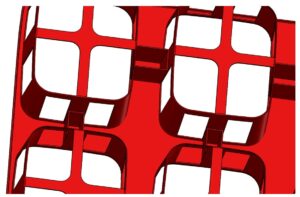
 The International Boat Builders’ Exhibition & Conference (IBEX) is the premier event for the marine industry, where innovation and craftsmanship converge. Michigan, long known for its strength in advanced manufacturing, is once again making waves at IBEX 2025. From propulsion systems to plastics and precision machining, these Michigan-based companies are shaping the future of boating.